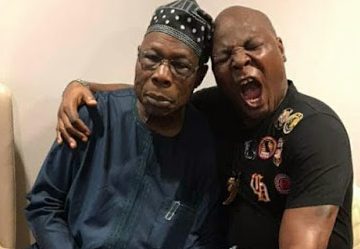
Former President Olusegun Obasanjo has disclosed that he once wished Nigerian entertainer Charles Oputa, popularly known as Charly Boy, had resembled his late father, Justice Chukwudifu Oputa, whom he described as a great man.
Obasanjo made the remark during a recent interview when asked about his changing perception of the entertainer. The former president said he had initially held a different view of Charly Boy but that his opinion had evolved, leading him to the statement about the entertainer's resemblance to his father.
Justice Chukwudifu Oputa, a respected figure in Nigerian legal circles, died several years ago. Obasanjo described him as a great man whose character and conduct stood in contrast to the public persona of the entertainer at the time. The former president’s comment underscores the weight he places on his father’s legacy, positioning the late jurist as a benchmark for personal and moral conduct.
The comment highlights a personal reflection from the former head of state on the differences between the entertainer's public image and the values associated with his father. Obasanjo did not elaborate further on the specific reasons for his changing view, but the remark frames the entertainer's image in relation to the legacy of his late father.
The interview in which Obasanjo made the comment was reported by Punch Newspapers, which published the former president's remarks under the headline "I wish Charlie Boy had resembled his father - Obasanjo." The report quoted Obasanjo saying he wished the entertainer had taken after his late father, whom he described as a great man.
There is no indication in the verified reporting that Obasanjo's remarks were intended as a broader critique of entertainers or Nigerian popular culture. The statement appears to be a personal reflection offered in response to a question about his views on Charly Boy specifically.
The Vanguard News feature story, headlined "How I came to like Charly Boy 'a bit,'" expands on the context of the former president's remarks. That report frames Obasanjo's comment as part of a broader reflection on how his perception of public figures has evolved over time. The article notes that the former president has, in recent interviews, spoken about the changing nature of his views on various personalities, with the Charly Boy comment serving as one illustration of that process. The Vanguard piece also situates the remark within the wider context of Obasanjo's public life, including his tenure as head of state and his continued engagement with Nigerian cultural figures.
Justice Chukwudifu Oputa’s legacy is notable in Nigerian public life. He served as a justice of the Supreme Court of Nigeria and was known for his integrity and commitment to the rule of law. His death was noted by legal professionals and public officials as a loss to the Nigerian judiciary. By contrasting his father’s stature with the public persona of Charly Boy, Obasanjo is invoking a figure who is widely recognized in Nigeria’s legal and political history.
Charly Boy, whose real name is Charles Oputa, is a well-known Nigerian entertainer, comedian, and social critic. He is recognized for his flamboyant style, provocative social commentary, and long presence in Nigeria’s entertainment industry. Over the decades, he has been a prominent, sometimes controversial, figure in Nigerian popular culture, known for challenging authority and using his platform to address social and political issues. The contrast between his public persona and the values associated with Justice Oputa is what Obasanjo appears to be referencing in his remark.
Obasanjo’s comment also touches on the theme of generational and familial expectations. The former president has often spoken about the influence of his upbringing and the values instilled by his parents. In this instance, he is drawing a direct line between the man he admired most—his late father—and his assessment of contemporary public figures. The remark, while personal, is being discussed in the context of Obasanjo’s broader engagement with Nigerian society and its cultural figures.
The Punch Newspapers report and the Vanguard News feature are the primary sources for the remarks attributed to Obasanjo. Both outlets published the former president’s statement, with Punch Newspapers leading the initial report and Vanguard News providing the longer feature analysis. No other sources have been verified as quoting Obasanjo on this specific topic.
Obasanjo did not offer further explanation for why his view of Charly Boy changed or what specific aspects of the entertainer’s persona prompted the initial difference of opinion. The reported text stops at the quoted statement, and neither the former president nor his media team has provided additional comment since the initial publications. Similarly, Charly Boy has not publicly responded to Obasanjo’s remark in the verified record.
The story, as it stands, is a brief reflection from a former head of state on the relationship between personal legacy and public perception. It illustrates how figures with long public records, such as Obasanjo, continue to reflect on the cultural landscape of Nigeria and the individuals who populate it. The comment also serves as a reminder of the enduring influence of family legacy in Nigerian public life, particularly as embodied by Justice Chukwudifu Oputa.
At this time, no further developments have been confirmed. Obasanjo's remarks stand as a stated personal reflection, and no additional comments from the former president or Charly Boy on the matter have been verified. Readers interested in the evolving dynamics between Nigeria’s political elite and its entertainment community may wish to watch for any follow-up statements from either party.