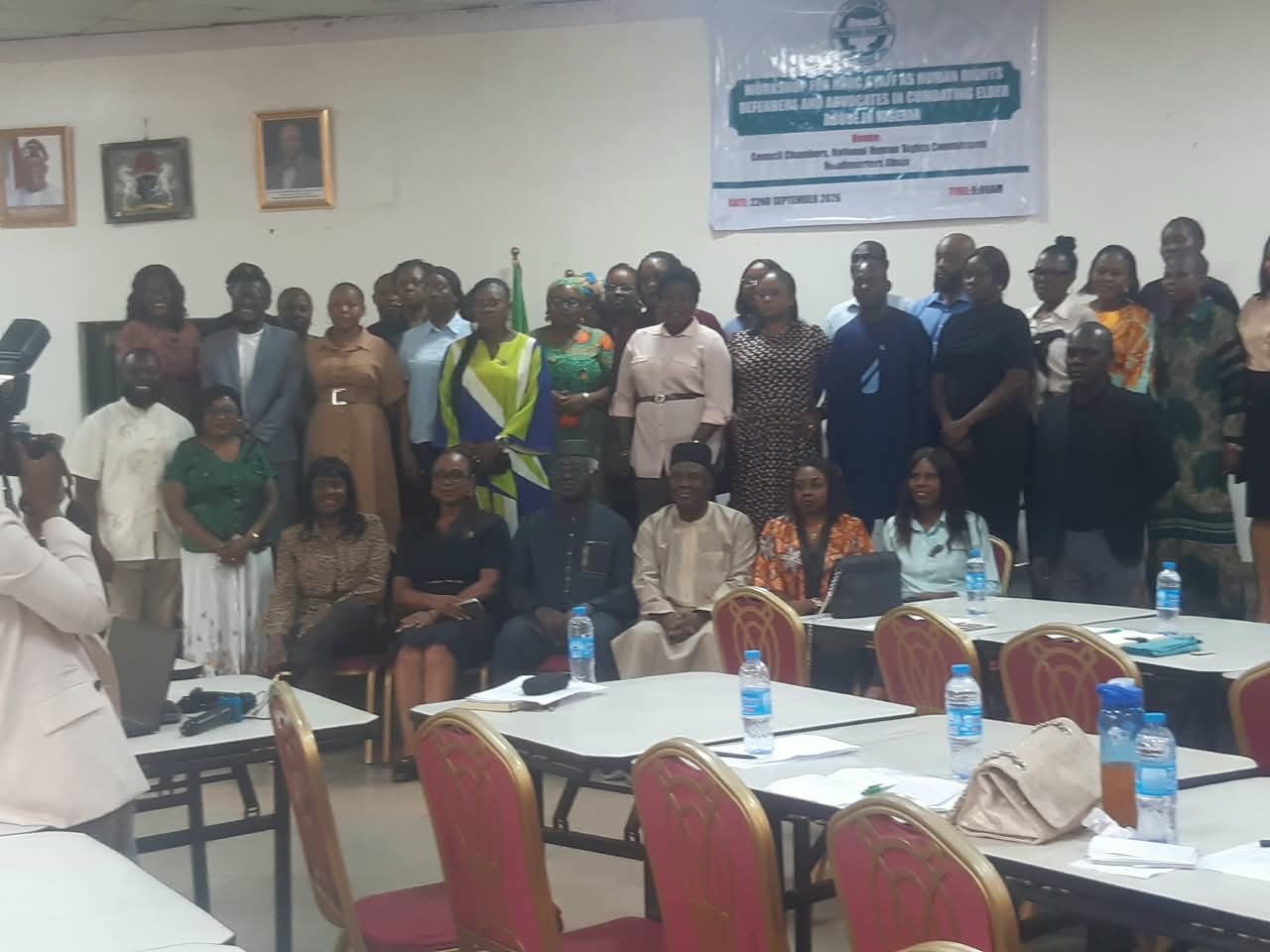
Dr Tony Ojukwu, SAN, Executive Secretary of the National Human Rights Commission (NHRC), declared on Tuesday that older persons are right holders entitled to full protection by the law. Ojukwu made the statement during a training session for staff members of the commission's department, the specific unit targeted by the training not specified in the source report.
The News Agency of Nigeria reported the statement, quoting Ojukwu as saying that older persons are right holders entitled to full protection by the law. The declaration positions older persons as right holders under the law, affirming their entitlement to comprehensive legal protection.
While the NHRC source did not elaborate on the specific legal frameworks or policy mechanisms that would operationalize this protection, the statement represents a formal recognition by Nigeria's leading human rights institution that older persons hold rights under the law and are entitled to its full force. The training context suggests the commission is engaged in institutional capacity-building to reinforce this position among its staff.
The source report from the News Agency of Nigeria carried the statement without additional commentary on the broader legal or policy implications, leaving the specific mechanisms of protection unspecified in the immediate reporting.
The declaration that older persons are right holders entitled to full legal protection carries significance as a formal position from Nigeria's principal human rights institution. It affirms the legal status of older persons as rights-bearers rather than passive beneficiaries of charity or social welfare. For Nigeria's aging population, the statement may serve as a reference point for advocacy, policy engagement, and awareness-raising regarding the rights of older persons. The institutional backing of the NHRC lends weight to the declaration, though the practical impact will depend on subsequent policy actions, legislative measures, or enforcement mechanisms that the commission may advocate for or support.
The News Agency of Nigeria report, published on September 24, 2026, quotes Dr Tony Ojukwu, SAN, Executive Secretary of the National Human Rights Commission, stating during Tuesday training sessions that older persons are right holders entitled to full protection by the law. The statement was delivered as part of staff training within the commission's departmental structure, though the specific ministry or agency targeted by the training was not identified in the report.
Ojukwu holds the title Senior Advocate of Nigeria (SAN), a prestigious legal designation that underscores his expertise and standing within the Nigerian legal profession. The NHRC, established to promote and protect human rights across the federation, operates under the authority of the Federal Government of Nigeria. Its mandate includes monitoring human rights compliance, investigating violations, and advocating for the strengthening of human rights protections across all sectors of society.
This declaration aligns with the commission's broader mandate to ensure that all persons within Nigeria's jurisdiction are aware of and can enforce their rights. By formally positioning older persons as right holders, the NHRC is asserting that the elderly population is entitled to the full spectrum of legal protections available under Nigerian law. This distinction is important, as it moves the discourse beyond social welfare or charity frameworks and anchors the protection of older persons in rights-based obligations.
However, the source reporting did not detail the specific legal instruments, policy frameworks, or legislative measures that would operationalize this protection. The report makes no mention of particular laws being referenced, nor does it outline the administrative mechanisms through which the declared protection would be enforced. It remains unclear whether the statement represents a restatement of existing legal obligations, an advocacy position seeking concrete implementation, or a precursor to policy reform.
The training context in which the statement was delivered suggests the commission is engaged in institutional capacity-building to reinforce this position among its staff. This implies that the declaration may be part of a broader effort to ensure that NHRC personnel understand and can effectively advocate for the rights of older persons. The capacity-building angle highlights the commission's role not only as a complaints mechanism but as an educational and advocacy body.
Without additional detail from the NHRC or corroborating government sources, the immediate practical implications of the declaration are limited. The statement stands as a formal affirmation of rights, but the translation of that affirmation into tangible protections will depend on follow-up actions, guidance issued to government agencies, legislative initiatives, or public education campaigns that the commission may undertake in the coming months.
Readers should note that the NHRC source report did not specify the specific department or agency targeted by the training session, nor did it elaborate on the legal frameworks that would underpin the declared protection. These gaps in the reporting leave important questions unanswered regarding the operationalization of the rights affirmed in the statement.